


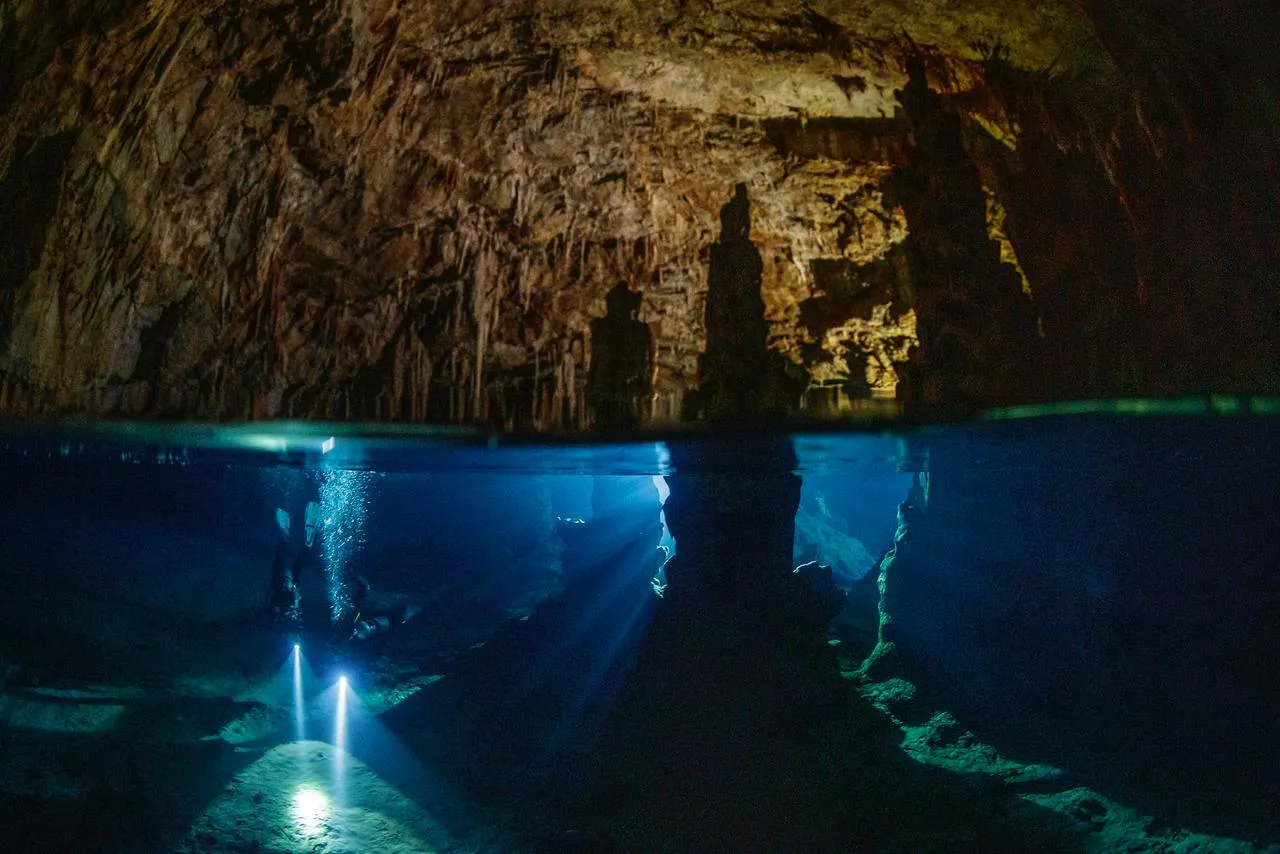
Few dive sites in Greece capture the imagination quite like Elephant Cave in Chania. Hidden beneath the crystal-clear waters of northwestern Crete, this remarkable underwater cave has become one of the island’s most famous diving attractions.
Known for its impressive rock formations, fascinating geological history, and the discovery of fossilized elephant remains, Elephant Cave offers a diving experience unlike any other in the Mediterranean.
For certified divers visiting Crete, it is often considered a must-see dive site. Even for those who are not yet certified, the story of the cave itself is fascinating and highlights why Chania has become one of the most exciting diving destinations in Greece.
In this guide, we’ll explore what makes Elephant Cave so special, what divers can expect underwater, and why it has earned a place among the most unique dive sites in Crete.
What Is Elephant Cave?
Elephant Cave is a partially submerged cave located along the Akrotiri Peninsula near Chania.
The cave gained international attention after researchers discovered fossilized remains of an extinct dwarf elephant species inside the cave. These fossils are estimated to be tens of thousands of years old and provide valuable insights into Crete’s prehistoric past.
Today, the cave combines natural history, geology, and scuba diving into a single unforgettable experience.
Unlike many underwater caves that are known primarily for their technical challenges, Elephant Cave is famous for its extraordinary beauty and unique historical significance.
Why Is It Called Elephant Cave?
The cave takes its name from the fossilized elephant bones discovered inside.
Scientists identified remains belonging to an extinct species of dwarf elephant that once inhabited Crete during prehistoric times.
The discovery was particularly important because it provided evidence of the island’s ancient wildlife and helped researchers better understand the evolution of Mediterranean island species.
For divers, knowing that they are exploring a site connected to such a remarkable discovery adds another dimension to the experience.
What Makes Elephant Cave Unique?
There are many beautiful dive sites around Crete, but Elephant Cave stands apart for several reasons.
The Massive Cave Chamber
One of the most impressive features is the enormous main chamber.
As divers enter the cave, they are greeted by a spectacular underwater environment featuring:
towering rock formations
large natural chambers
dramatic limestone walls
crystal-clear water
The sheer scale of the cave surprises many divers.
Natural Light Effects
One of the highlights of the dive is the way sunlight enters the cave.
Light filtering through openings creates stunning blue and turquoise reflections throughout the chamber.
During certain times of day, these light effects create an almost surreal atmosphere that photographers particularly love.
Geological Formations
The cave contains beautiful stalactites and stalagmites that formed thousands of years ago when sea levels were lower.
These formations provide a glimpse into the geological history of Crete and demonstrate how dramatically the landscape has changed over time.
Historical Significance
Very few dive sites combine natural beauty with such important archaeological and paleontological discoveries.
The presence of prehistoric elephant remains makes the cave internationally significant.
Where Is Elephant Cave Located?
Elephant Cave is located near the Akrotiri Peninsula east of Chania.
The dive site is typically accessed by boat, allowing divers to reach the cave comfortably while enjoying views of Crete’s coastline.
Boat access also helps preserve the area and minimizes environmental impact on the surrounding marine ecosystem.
What Diving Conditions Can You Expect?
One reason Elephant Cave is so popular is the generally excellent diving conditions found around Chania.
Conditions vary depending on weather and season, but divers often enjoy:
visibility between 15 and 30 meters
calm Mediterranean waters
mild currents
comfortable temperatures during diving season
These favorable conditions help make the cave accessible to many recreational divers.
However, cave environments always require proper training, supervision, and adherence to safety procedures.
Is Elephant Cave Suitable for Beginners?
Elephant Cave is generally considered a dive for certified divers.
While the entrance area and surrounding waters may be accessible under certain conditions, exploring the cave itself requires:
good buoyancy control
comfort underwater
adherence to instructor guidance
appropriate certification level
Because every diver’s experience level is different, dive centers assess conditions and diver qualifications before planning visits to the site.
For beginners who are not yet certified, there are many excellent introductory dive sites around Chania that provide a fantastic first diving experience.
Marine Life Around Elephant Cave
Although the cave itself is the main attraction, the surrounding waters are home to a variety of Mediterranean marine life.
Divers may encounter:
sea bream
groupers
moray eels
octopus
nudibranchs
damselfish
wrasse
starfish
Seasonal conditions can also influence what species are observed during a dive.
The combination of marine life and dramatic underwater scenery makes every visit slightly different.
Why Underwater Photographers Love Elephant Cave
Elephant Cave is widely considered one of the most photogenic dive sites in Crete.
Photographers are drawn to:
dramatic cave entrances
natural light beams
clear water visibility
impressive geological formations
unique cave atmosphere
The interplay between light and shadow creates extraordinary opportunities for underwater photography.
Many of the most iconic diving images from Chania originate from Elephant Cave.
When Is the Best Time to Dive Elephant Cave?
The diving season in Crete typically runs from spring through autumn.
Many divers prefer:
May and June
These months often offer:
pleasant temperatures
good visibility
fewer crowds
July and August
Perfect for:
warm water
stable weather
extended diving days
September and October
Often considered ideal because:
sea temperatures remain warm
visibility is excellent
tourist numbers begin to decrease
Why Elephant Cave Is One of the Most Famous Dive Sites in Greece
Several factors contribute to Elephant Cave’s reputation.
It combines:
natural beauty
geological significance
paleontological history
excellent diving conditions
unique underwater formations
Very few dive sites can offer such a complete experience.
This combination has helped establish Chania as one of Greece’s premier scuba diving destinations.
Protecting Elephant Cave
As interest in diving grows, protecting sites like Elephant Cave becomes increasingly important.
Responsible divers help preserve the cave by:
maintaining proper buoyancy
avoiding contact with formations
respecting marine life
following instructor guidance
supporting sustainable diving practices
Conservation ensures future generations can continue enjoying this remarkable underwater environment.
DAN Europe Marine Conservation Resources
Frequently Asked Questions
How deep is Elephant Cave in Chania?
Depths vary throughout the site, but diving plans depend on certification level, conditions, and instructor guidance.
Why is it called Elephant Cave?
The cave is named after fossilized remains of an extinct dwarf elephant species discovered inside.
Can beginners dive Elephant Cave?
The site is generally recommended for certified divers due to the cave environment and required diving skills.
What marine life can be seen at Elephant Cave?
Divers may encounter octopus, moray eels, sea bream, groupers, nudibranchs, and other Mediterranean species.
Is Elephant Cave one of the best dive sites in Crete?
Yes. Many divers consider Elephant Cave one of the most unique and memorable dive sites in Greece.
Experience Elephant Cave with Blue Adventures
For certified divers visiting Chania, Elephant Cave is a dive site that deserves a place on your itinerary.
Its combination of history, geology, marine life, and breathtaking underwater scenery creates an experience that few dive sites can match.
Whether you’re fascinated by underwater caves, interested in Crete’s natural history, or simply looking for one of the island’s most spectacular dives, Elephant Cave offers an unforgettable adventure beneath the surface.
Ready to explore one of Crete’s most famous dive sites?