


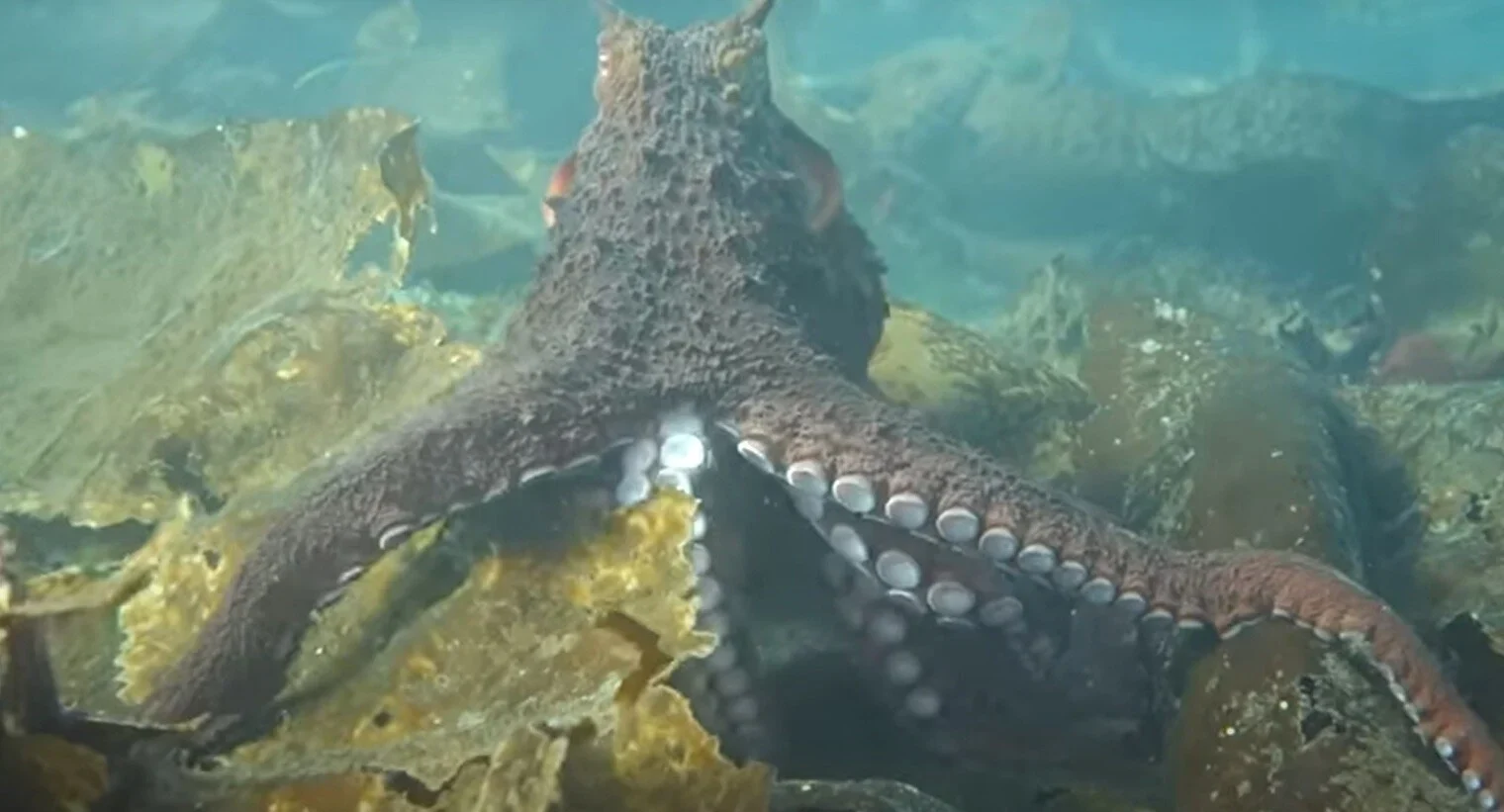
The Mediterranean octopus is one of the most fascinating creatures you can encounter while scuba diving in Crete. Intelligent, curious, and capable of changing both its color and texture in seconds, this remarkable animal has amazed divers, marine biologists, and underwater photographers for generations.
Unlike fast-moving fish that disappear in an instant, an octopus often rewards patient divers with unforgettable encounters. If you slow down, observe carefully, and respect its space, you may witness behaviors that few marine animals can match.
The waters around Chania provide excellent habitat for the Mediterranean octopus. Rocky reefs, underwater caves, and hidden crevices create the perfect environment for these incredible animals, making Crete one of the best places in Greece to see them in their natural habitat.
Whether you’re planning your first scuba diving experience or you’re an experienced certified diver, spotting an octopus underwater is always a highlight of any dive.
In this guide, you’ll discover where to find Mediterranean octopuses in Crete, how they behave, why they are considered among the world’s most intelligent invertebrates, and how divers can observe them responsibly.
Meet the Mediterranean Octopus
The Mediterranean octopus (Octopus vulgaris), often called the common octopus, is one of the most recognizable marine animals found throughout the Mediterranean Sea.
Despite its name, there is nothing “common” about this remarkable creature.
An octopus has:
- eight powerful arms
- three hearts
- blue blood
- excellent eyesight
- an advanced nervous system
- incredible camouflage abilities
More than two-thirds of an octopus’s neurons are located in its arms, allowing each arm to perform complex movements almost independently.
This unique anatomy makes the octopus one of the most intelligent animals living beneath the Mediterranean Sea.
Why Divers Love Encountering Octopuses
Many experienced divers will tell you that seeing an octopus is often more exciting than encountering much larger marine animals.
Why?
Because every octopus behaves differently.
Some quickly retreat into their rocky shelters.
Others cautiously observe divers from a distance.
Occasionally, an especially curious octopus may slowly extend an arm or change color while watching its visitors.
These moments create unforgettable underwater experiences because they feel like genuine interactions rather than simple wildlife sightings.
Unlike many fish that continuously swim, octopuses encourage divers to slow down, observe carefully, and appreciate the smaller details of the underwater world.
Where Can You Find Octopuses in Crete?
Mediterranean octopuses prefer rocky environments where they can hide safely during the day.
Around Chania, they are commonly found near:
- underwater caves
- rocky reefs
- stone ledges
- cracks in limestone formations
- artificial reefs
- old amphora fragments
- submerged rocks
The coastline around northwestern Crete offers countless hiding places, making it an ideal habitat.
Popular dive sites where divers frequently encounter octopuses include areas around:
- Elephant Cave
- Seal Cave
- Cathedral Cave
- The Wall Dive
- rocky reefs near the Akrotiri Peninsula
How Does an Octopus Change Color?
One of the octopus’s most impressive abilities is its extraordinary camouflage.
Its skin contains specialized pigment cells called chromatophores that allow it to change color almost instantly.
Within seconds, an octopus can become:
- dark brown
- light grey
- reddish
- sandy beige
- mottled rock patterns
But color is only part of the transformation.
The octopus can also change the texture of its skin, making itself appear rough like rocks or smooth like sand.
This remarkable camouflage serves several purposes:
- hiding from predators
- surprising prey
- communicating with other octopuses
- reacting to different situations
Watching an octopus disappear before your eyes is one of the most magical moments a diver can experience.
Intelligence Beneath the Surface
Marine biologists consider octopuses among the most intelligent invertebrates on Earth.
Scientific studies have shown that octopuses can:
- solve puzzles
- remember solutions
- recognize individual humans
- open containers
- escape complex enclosures
- learn through observation
Unlike many marine animals that rely mainly on instinct, octopuses display clear signs of curiosity and problem-solving.
Divers occasionally notice octopuses carefully watching them from their dens, almost appearing to study the visitors before deciding whether to hide or continue observing.
This intelligence makes every encounter feel surprisingly personal.
How Big Do Mediterranean Octopuses Grow?
The Mediterranean octopus is much larger than many people expect.
Adult individuals typically have:
- an arm span between 60 and 100 centimeters
- a body length of around 25 centimeters
- a weight between 3 and 10 kilograms
Exceptional individuals can grow even larger.
Fortunately for divers, octopuses are not aggressive animals.
They rely on camouflage and intelligence rather than confrontation.
If they feel threatened, they almost always choose to hide rather than defend themselves.
What Does a Mediterranean Octopus Eat?
The octopus is an opportunistic hunter.
Rather than chasing prey over long distances, it usually waits patiently before launching a quick surprise attack.
Its diet commonly includes:
- crabs
- shrimp
- small fish
- mussels
- clams
- snails
- other mollusks
The octopus uses its powerful beak, hidden beneath its arms, to break shells and feed.
Divers sometimes discover small piles of empty shells near an octopus’s den.
These “shell middens” are often one of the easiest signs that an octopus lives nearby.
Best Time of Day to Spot an Octopus
Although octopuses can be seen throughout the day, they are generally more active during the early morning, late afternoon, and evening.
During daylight hours they often remain partially hidden inside their dens, with only their eyes visible.
Patient divers who move slowly and scan rocky areas carefully have the best chance of spotting one.
Professional dive guides know exactly where octopuses commonly hide and can often point them out before beginners even notice they are there.
This is another reason why guided dives around Chania are so rewarding.
Can Beginners See an Octopus?
Absolutely.
One of the best things about octopuses is that they are found at a variety of depths, including shallow reefs suitable for beginner divers.
Many Discover Scuba Diving participants are lucky enough to encounter an octopus during their very first underwater experience.
Of course, wildlife sightings can never be guaranteed.
Marine animals move freely, and every dive is different.
However, the calm reefs around Chania provide excellent opportunities for beginners to observe Mediterranean marine life safely.
Why Underwater Photographers Love Octopuses
For underwater photographers, few subjects are as rewarding as an octopus.
Their constantly changing colors, expressive eyes, and unusual movements create endless photographic opportunities.
The most memorable photographs often happen when photographers remain patient and allow the octopus to behave naturally.
Rather than chasing the animal, experienced photographers wait quietly and let curiosity bring the octopus closer.
The result is often a much more authentic image that captures the true personality of this remarkable creature.
A Reminder About Responsible Wildlife Encounters
Watching an octopus in the wild is a privilege.
Divers should always remember that they are visitors in the animal’s home.
Never:
- touch an octopus
- block its escape route
- chase it for photographs
- force interaction
- disturb its den
The best encounters happen when divers observe quietly and allow natural behavior to unfold.
Responsible diving protects not only the octopus but also the delicate Mediterranean ecosystem that supports it.
The Amazing Defense Mechanisms of an Octopus
The Mediterranean octopus has survived for millions of years thanks to an extraordinary collection of defense mechanisms.
Instead of relying on speed or strength, it depends on intelligence, camouflage, and quick decision-making.
When threatened, an octopus may:
- instantly change color
- alter the texture of its skin
- flatten its body against rocks
- hide inside narrow crevices
- release a cloud of ink
- rapidly jet away using water propulsion
The famous ink cloud is not simply used to hide.
It also confuses predators by disrupting their sense of smell, giving the octopus valuable time to escape.
Fortunately, divers rarely witness this behavior because octopuses usually remain calm when approached respectfully.
How Long Does a Mediterranean Octopus Live?
One surprising fact about octopuses is their relatively short lifespan.
Most Mediterranean octopuses live for only one to two years.
During this short life they grow rapidly, hunt almost every day, reproduce once, and then complete their natural life cycle.
Female octopuses show extraordinary parental care.
After laying thousands of eggs inside a protected den, they guard and clean them continuously, often refusing to leave the nest or feed.
Once the eggs hatch, the female’s life cycle naturally comes to an end.
This remarkable dedication is one of the most fascinating behaviors in the marine world.
Common Myths About Octopuses
Because octopuses appear mysterious, many myths surround these incredible animals.
Let’s separate fact from fiction.
Myth: Octopuses Are Dangerous to Divers
False.
Mediterranean octopuses are shy and naturally avoid people.
They prefer hiding rather than confronting anything larger than themselves.
Most encounters involve the octopus observing divers before quietly disappearing into its shelter.
Myth: Octopuses Attack People
False.
Healthy wild octopuses have no interest in attacking recreational divers.
If they feel uncomfortable, they simply swim away or camouflage themselves.
Myth: They Can Change Into Any Object
Not exactly.
While their camouflage abilities are extraordinary, octopuses don’t actually become other objects.
Instead, they adjust their skin color, pattern, posture, and texture to blend into their surroundings remarkably well.
Why Seeing an Octopus Is So Memorable
Ask experienced divers about their favorite underwater encounters, and many will mention an octopus.
Unlike larger marine animals that often pass by quickly, octopus encounters usually happen slowly.
You notice movement.
A pair of intelligent eyes watches from beneath a rock.
Gradually, an arm appears.
The animal changes color.
For several quiet moments, you and the octopus simply observe each other.
These encounters feel personal, almost like meeting another curious mind beneath the surface.
It’s one of the reasons divers return to Chania year after year.
Best Dive Sites Around Chania to Spot Octopuses
Although octopuses can be found throughout Crete, certain habitats provide particularly good opportunities.
Elephant Cave
The rocky surroundings and underwater formations create ideal hiding places.
Seal Cave
Numerous cracks and rocky ledges provide excellent habitat for octopuses and other Mediterranean species.
Cathedral Cave
The surrounding reef supports abundant marine life, making octopus sightings relatively common.
Rocky Coastal Reefs
Many shallow reefs around Chania are home to resident octopuses that experienced dive guides know well.
Each dive site offers slightly different conditions, ensuring every encounter feels unique.
What Other Marine Animals Live Alongside Octopuses?
The Mediterranean octopus shares its habitat with many fascinating species.
While searching for an octopus, divers often encounter:
- moray eels
- groupers
- sea bream
- rainbow wrasse
- damselfish
- nudibranchs
- starfish
- sea urchins
- shrimp
- crabs
These animals form part of the healthy Mediterranean ecosystem that makes diving around Chania so rewarding.
Tips for Photographing an Octopus
Photographing an octopus requires patience rather than speed.
For the best results:
- move slowly
- avoid sudden movements
- keep neutral buoyancy
- allow the octopus to relax
- never use excessive flash repeatedly
- respect the animal’s personal space
Some of the best underwater photographs happen after simply waiting quietly for a few minutes.
Curiosity often brings the octopus back into view.
Helping Protect Octopus Habitats
The future of Mediterranean marine life depends on responsible diving and sustainable tourism.
As divers, we can all help by:
- maintaining excellent buoyancy
- avoiding contact with marine life
- never removing shells or rocks
- avoiding litter
- supporting environmentally responsible dive centers
- respecting protected marine areas
Small actions underwater make a big difference over time.
By protecting octopus habitats, we also protect hundreds of other Mediterranean species.
Frequently Asked Questions
Where can I see octopuses while diving in Crete?
Octopuses are commonly found around rocky reefs, underwater caves, and crevices throughout Chania, including areas near Elephant Cave, Cathedral Cave, and Seal Cave.
Are Mediterranean octopuses dangerous?
No.
They are shy animals that naturally avoid humans and pose no threat to recreational divers.
How intelligent are octopuses?
Octopuses are considered among the world’s most intelligent invertebrates.
They can solve problems, recognize patterns, remember solutions, and even identify individual people
Can beginner divers see octopuses?
Yes.
Many beginner dive sites around Chania are home to octopuses, making them one of the most exciting animals first-time divers may encounter.
What is the best time to see octopuses in Crete?
They can be seen throughout the diving season, although early morning and late afternoon dives often provide the best opportunities.
Why do octopuses change color?
They use specialized skin cells called chromatophores to camouflage themselves, communicate, and respond to their surroundings.
Discover Crete’s Incredible Marine Life with Blue Adventures
Seeing a Mediterranean octopus in its natural habitat is an experience you’ll never forget.
Its intelligence, curiosity, and extraordinary camouflage remind us that some of the ocean’s most remarkable creatures aren’t always the biggest.
Whether you’re exploring Elephant Cave, drifting along rocky reefs, or taking your very first scuba dive, every underwater adventure in Chania offers the possibility of encountering one of the Mediterranean’s most fascinating residents.
Our experienced team knows the local dive sites intimately and is passionate about helping divers discover Crete’s incredible underwater wildlife while respecting the marine environment.
Whether you’re a beginner or an experienced certified diver, we’ll help you experience the magic of the Mediterranean safely and responsibly.
Ready to explore the underwater world of Chania?
Join Blue Adventures and discover why the Mediterranean Sea continues to surprise divers from around the world.