

Crete is an excellent destination for exploring the Mediterranean Sea, but if you are planning an underwater activity during your holiday, you might be wondering: should you choose scuba diving or snorkeling?
Both experiences allow you to discover the marine environment around Chania, but they offer very different ways of exploring it.
Snorkeling lets you observe the underwater world from the surface, while scuba diving allows you to descend beneath it and experience marine life from an entirely different perspective.
In this guide, we compare scuba diving vs snorkeling in Crete, explain what beginners should expect, and help you decide which experience best suits your interests.
Scuba Diving vs Snorkeling: What’s the Difference?
The main difference between scuba diving and snorkeling is how you explore the underwater environment.
When snorkeling, you remain primarily at the surface, breathing through a snorkel while looking down into the water. You may also make short breath-hold dives if you have the appropriate skills and conditions allow.
Scuba diving uses specialized equipment, including a regulator and compressed-air cylinder, allowing you to breathe underwater and explore below the surface for longer periods.
Both activities can be enjoyable, but the experience is quite different.
Snorkeling in Crete
Snorkeling is a simple way to discover the Mediterranean marine environment without using scuba equipment.
With a mask, snorkel and fins, you can observe fish, rocks and underwater vegetation from the surface.
It can be a good option for travelers who:
- Prefer staying close to the surface
- Want a relatively simple water activity
- Have limited time during their holiday
- Enjoy swimming and observing marine life
- Are not interested in breathing underwater
However, snorkeling still requires suitable swimming ability, awareness of sea conditions and appropriate safety precautions.
Scuba Diving in Crete
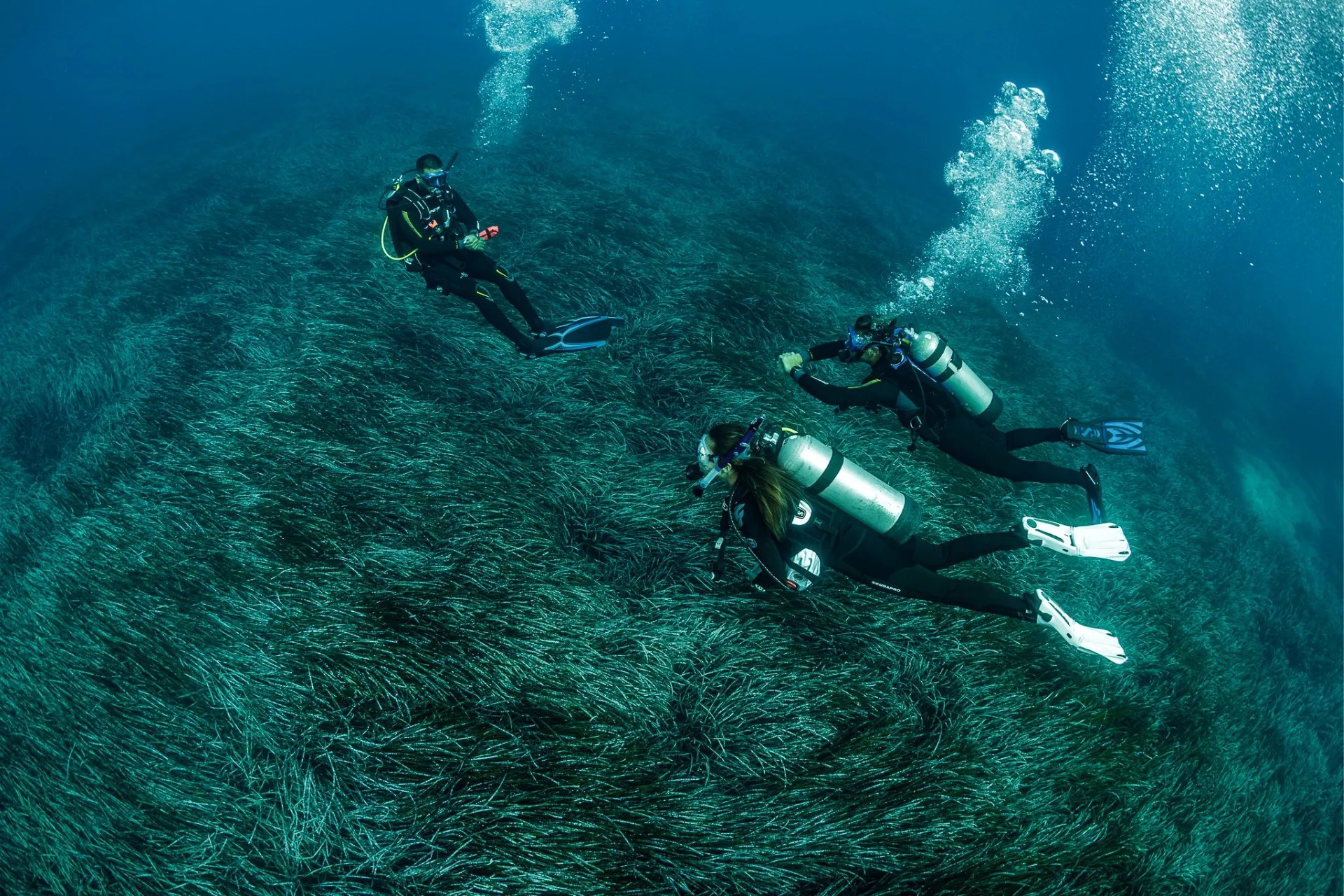
Scuba diving offers a more immersive experience.
Instead of observing everything from above, you enter the underwater environment and explore it at depth.
You can swim alongside rocky formations, observe fish at their natural level and discover details that may be difficult to notice from the surface.
One of the most exciting moments for first-time divers is realizing that they can breathe comfortably underwater while surrounded by the Mediterranean Sea.
You do not need previous scuba certification to try an appropriate introductory diving experience under professional supervision.
Scuba Diving vs Snorkeling in Crete: Quick Comparison
| Feature | Snorkeling | Scuba Diving |
|---|---|---|
| Breathing | Through a snorkel at the surface | Through a scuba regulator underwater |
| Equipment | Mask, snorkel and fins | Complete scuba equipment |
| Depth | Primarily at the surface | Below the surface within program limits |
| Previous certification | Not normally required | Not required for introductory programs |
| Professional supervision | Depends on the activity | Required for introductory scuba programs |
| Marine life | Viewed mainly from above | Observed underwater at different depths |
| Experience | Surface exploration | Immersive underwater exploration |
Key takeaway: Snorkeling is ideal for observing the sea from the surface, while scuba diving is better suited to travelers who want a more immersive underwater experience.
What Marine Life Can You See in Crete?
The waters around Chania are home to a variety of Mediterranean marine species.
Depending on the location, season and conditions, visitors may encounter sea bream, wrasse, damselfish, octopus, moray eels, groupers and other marine animals.
Both snorkeling and scuba diving can provide interesting wildlife encounters, but they offer different perspectives.
Marine Life While Snorkeling
In suitable shallow areas, snorkelers may observe small fish, rocky habitats and underwater vegetation.
Sunlight often makes the shallow underwater landscape particularly attractive.
However, your observations are generally limited to what you can see from the surface or during brief breath-hold dives.
Marine Life While Scuba Diving
Scuba diving allows you to explore underwater habitats more closely, while maintaining an appropriate distance from marine animals.
You may notice an octopus hiding between rocks, a moray eel looking out from a crevice or small fish swimming around a reef.
Because you can remain underwater for longer than during a breath-hold dive, you have more time to observe natural animal behavior without rushing.
Of course, wildlife sightings are never guaranteed. Responsible diving means observing animals without touching, chasing or disturbing them.
Which Experience Is Better for Beginners?
Both snorkeling and introductory scuba diving can be suitable for beginners, provided the activity matches their abilities and the conditions are appropriate.
The best choice depends on what you want from the experience.
If you enjoy swimming and prefer remaining at the surface, snorkeling may feel more familiar.
If you are curious about breathing underwater and discovering the sea from below, an introductory scuba dive may be more rewarding.
Do You Need Experience to Try Scuba Diving?
No previous scuba certification is required for an introductory program such as PADI Discover Scuba Diving.
Before entering the water, participants receive an explanation of the equipment, important safety procedures and basic underwater skills.
The experience takes place under professional supervision, with the depth and activities determined by the program requirements and local conditions.
You do not need to become a certified diver before discovering what scuba diving feels like.
Is Scuba Diving Safe for First-Time Divers?
Safety is understandably one of the biggest concerns for travelers considering their first scuba dive.
Introductory scuba programs are designed to introduce beginners to diving through structured instruction, suitable equipment and professional supervision.
Before participating, you should complete the required medical screening and inform the dive center about any health concerns that may affect your ability to dive.
During the experience, your instructor explains how the equipment works, how to communicate underwater and what to do if you feel uncomfortable.
Like any water activity, scuba diving involves risks, and appropriate supervision and safety procedures are essential.
For beginners, choosing a professional dive center and a suitable diving environment is more important than trying to reach a particular depth.
Why Chania Is a Great Place to Explore Underwater
Chania offers a fascinating combination of Mediterranean marine life, rocky coastal landscapes and underwater geological formations.
Depending on the site, divers can discover rocky reefs, interesting formations and a variety of fish species.
Different locations around Chania offer different underwater environments, and conditions can change with the weather.
This makes local knowledge particularly valuable when choosing where to dive.
For beginners, the priority is selecting a suitable location where they can become comfortable with the equipment and enjoy their first underwater experience.
For certified divers, Chania also offers opportunities to explore more varied underwater landscapes within their training and experience limits.
Can You Try Scuba Diving Before Taking a PADI Course?
Yes. In fact, trying scuba diving before committing to a full certification course can be a useful way to discover whether you enjoy the activity.
An introductory experience allows you to become familiar with breathing underwater, wearing scuba equipment and following an instructor beneath the surface.
If you enjoy the experience and want to continue diving during future holidays, you can consider becoming a certified diver.
The PADI Open Water Diver course provides structured training in scuba knowledge, equipment use, underwater skills and recreational dive planning.
After successfully completing the course requirements, you receive a certification recognized by dive operators internationally.
This creates a natural progression from your first underwater experience to exploring new destinations as a certified diver.
Scuba Diving or Snorkeling: Which Should You Choose?
There is no single correct answer for every traveler.
Snorkeling is a good choice if you want to observe marine life while remaining close to the surface and prefer a simpler equipment setup.
Scuba diving is a good choice if you want to experience the underwater world more fully, learn new skills and explore beneath the surface with professional guidance.
For travelers visiting Chania who have always wondered what it feels like to breathe underwater, an introductory scuba experience offers an opportunity to discover something completely different from swimming or snorkeling.
The most important consideration is choosing an activity appropriate for your abilities, interests and the conditions on the day.
Discover Scuba Diving in Chania with Blue Adventures
Exploring the Mediterranean Sea is one of the most memorable ways to experience Crete.
While snorkeling provides a beautiful view from the surface, scuba diving opens up an entirely different perspective.
At Blue Adventures in Chania, visitors can explore introductory scuba diving experiences designed for people who want to discover the underwater world without already holding a diving certification.
With professional guidance, suitable equipment and attention to safety, your first dive can become the beginning of a new interest in the sea.
Whether you are curious about marine life, interested in learning to dive or simply looking for a different holiday experience, discovering scuba diving in Crete may be the perfect next step.
Ready to experience the Mediterranean from below the surface?
Explore the available beginner diving experiences with Blue Adventures and find out what to expect from your first scuba dive in Chania.